Hire an Expert
Jumpstart Your Federal Marketplace
Build Your Real Federal Opportunity Blueprint
Remove the guess work and expedite your path to a solid federal business foundation.
Shadow an Expert as I Implement It
For You / With You
Transform Your Federal Business with Clarity, Confidence, and Consistency
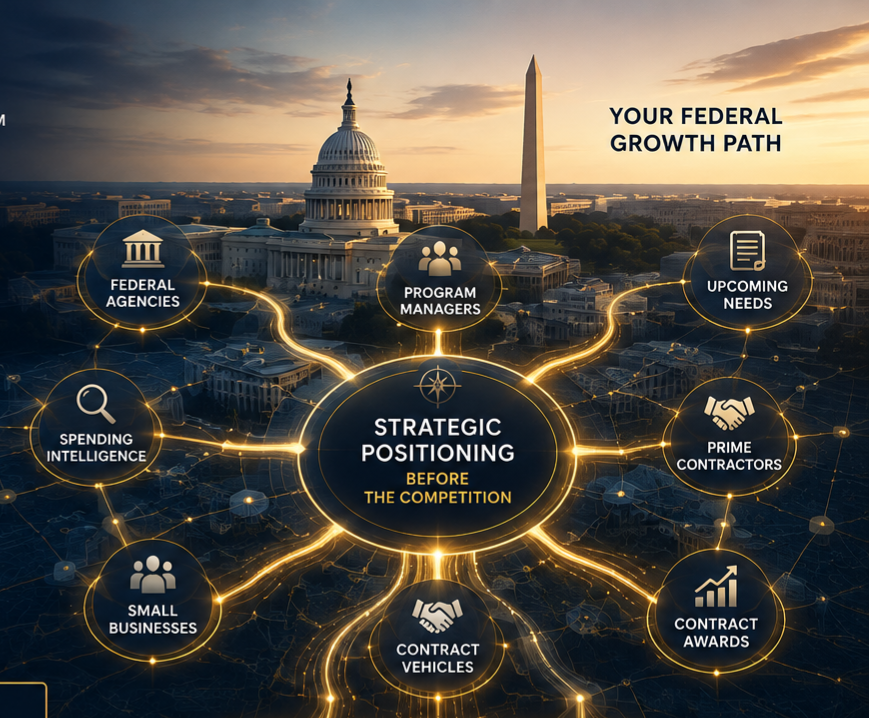
Does This Sound Familiar to You?
☑ "I'm registered in SAM.gov... now what?"
☑ "I have a GSA Schedule... now what?"
☑ "Why am I always chasing bids?"
☑ "Why isn't my contract vehicle generating business?"
☑ "I know there's more opportunity... I just don't know where to begin."
Because the real federal marketplace exists long before opportunities ever appear on SAM.gov.
Winning begins long before the solicitation is published.
You'll leave the call seeing your federal marketplace in a whole new way.
During our call, we'll begin exploring:
Who already buys what you sell.
Who's winning those contracts.
Where future opportunities are already taking shape.
A first glimpse inside the federal ecosystem that drives it all.
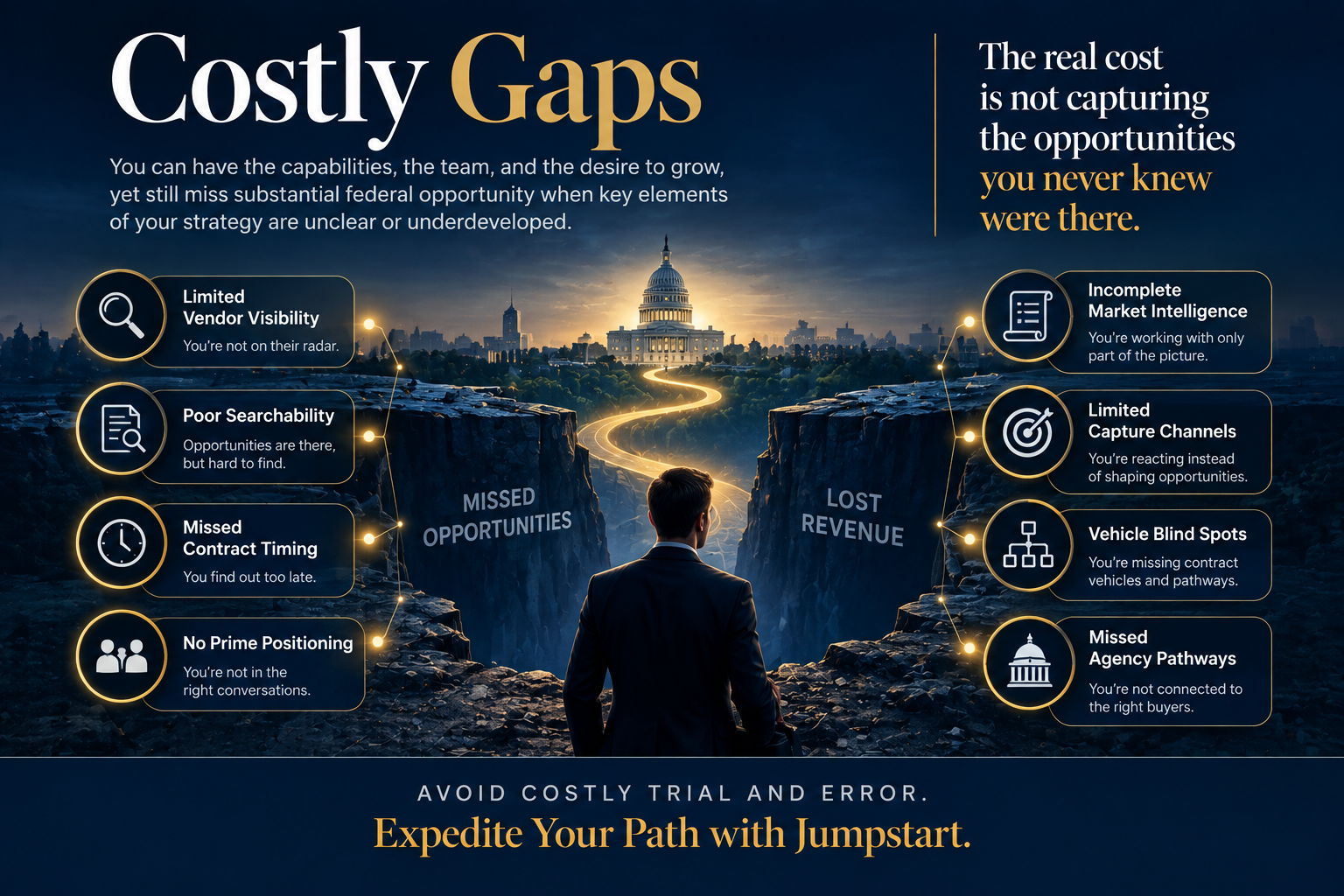
Costly Gaps
Most vendors do not fail because they lack capability.
They fail because they lack visibility, positioning, and a trained federal sales strategy.
They register.
They chase bids.
They miss the larger opportunity.
The real cost is not knowing where to position, who to pursue, and how to capture opportunities you never knew were there.
One Giant Revealing Matchmaking Buying System
The federal marketplace is built to reveal who buys, how they buy, who already holds the work, what is coming next, and where your company can position.
Government buyers, prime contractors, and teaming partners can search for companies like yours. And you can search for them.
Contract history leaves tracks. Those tracks lead to your targets, your positioning opportunities, and your competitive advantage.
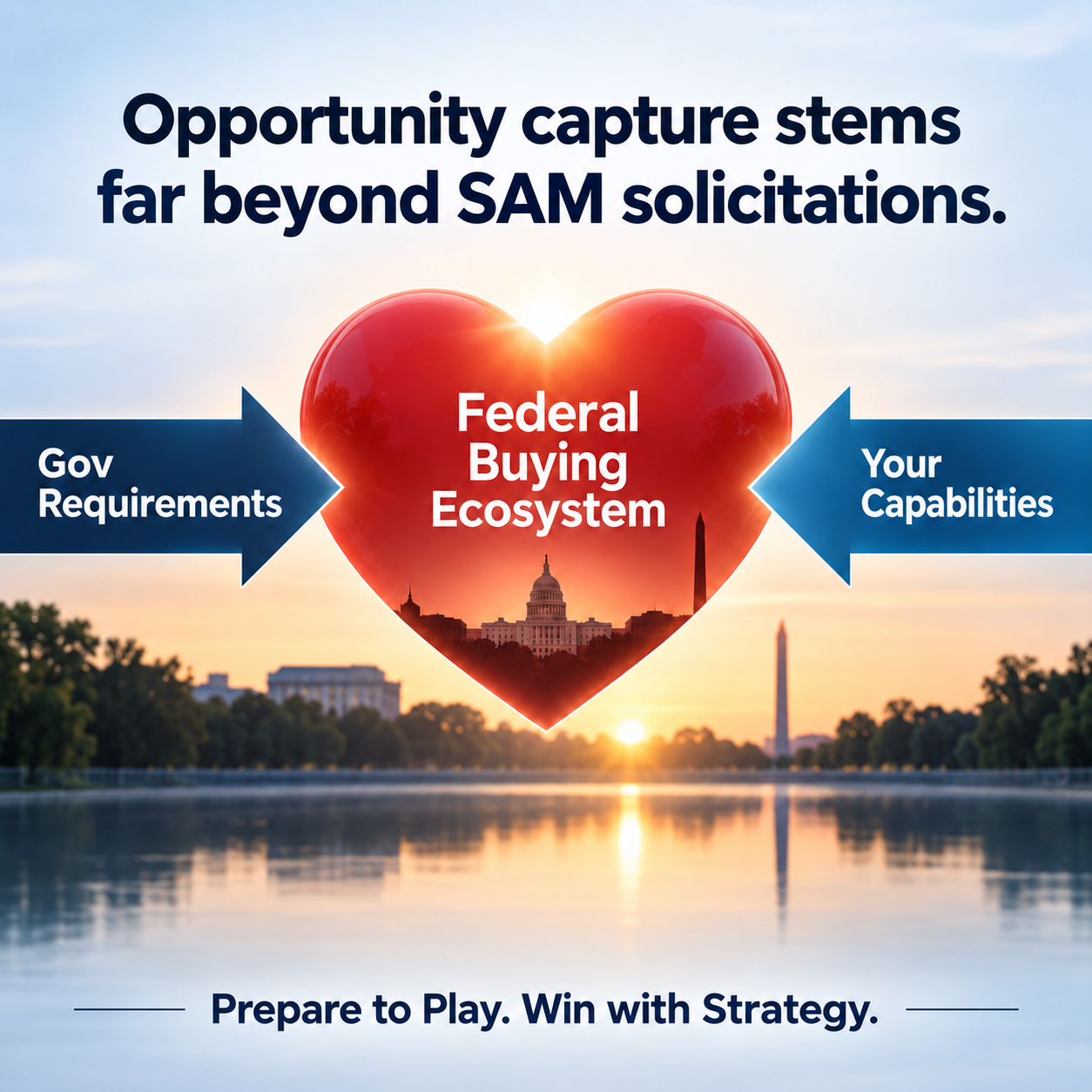
Cut through the myths and misinformation surrounding federal contracting.
See Your Real Federal Marketplace
Your SAM.gov registration is just the tip of the iceberg.
Federal contract history leaves a trail.
See who already buys what you sell, how much they spend, who holds the contracts, and where opportunity may be developing.
Free Step-by-Step Federal Market Validation Guide
Use USAspending.gov to begin validating your federal market and uncovering the intelligence behind real opportunity.
It All Starts with a Market Analysis.


Hi, I'm Abby Kennedy.
I entered government contracting believing success meant finding bids and hoping to win.
So I chased opportunities. I worked late nights. I tried to figure out requirements, terminology, and rules I didn't fully understand—and constantly felt like everyone else knew something I didn't.
It was frustrating, overwhelming, and incredibly time-consuming.
Then I won my first government contract.
And everything changed.
Once I got inside the marketplace, I discovered an entire world of strategy, relationships, procurement paths, and opportunity I never knew existed.
Within five years, I grew our government business from zero to more than $55 million in direct government contract awards.
Years later, working alongside a former U.S. Navy Contracting Officer, I gained an even deeper understanding of how federal agencies plan, buy, evaluate, and award.
Knowing what I know now, I cannot sit idle.
I want YOU to see what I see—a Big, Beautiful, Revealing Matchmaking Ecosystem where government buyers need your talent and innovation, contracting history leaves tracks, and opportunity extends far beyond waiting for solicitations on SAM.gov.
My passion is helping you see where YOU fit inside this marketplace—and putting the strategies into action to build, win, and grow.
And to do it in a comfortable, hands-on way that replaces hesitation with confidence—as I show you exactly what to do, how to do it, and why, as it applies to YOUR specific offerings.
And so evolved my Shadow Me™ Jumpstart Program.
How Shadow Me™ was born.
A Faster Path to Federal Growth
Building a successful federal business takes more than finding opportunities.
It requires strategy, positioning, implementation, and consistent execution.
Building that foundation on your own can take years.
That's why I built a different kind of federal consulting experience.
Shadow Me™
Most consultants tell you what to do.
Some will even do the work for you.
I believe the greatest long-term value comes from doing both.
Through my Shadow Me™ approach, I build and implement your Federal Growth System™ while giving you the opportunity to see exactly what I'm doing, how I'm doing it, and why.
Every strategy is immediately put into action—from market analysis and opportunity pipelines to strategic positioning, buyer outreach, capability statements, and proposal preparation.
You choose how deeply you want to learn along the way.
The result isn't just a plan.
It's a Federal Growth System™ that's actively being built, implemented, and put into action as we work together—helping you compete more effectively and win more federal contracts.
Not just a plan.
A federal business built to compete.
✓ Your Federal Opportunity Blueprint™ — built around what you sell, who already buys it, your current opportunities, and your highest-potential path to federal growth.
✓ A Strong Federal Foundation — positioning your business to be discovered, trusted, and engaged.
✓ Strategic Positioning — understanding where to focus before opportunities are released.
✓ A Repeatable Federal Growth Pipeline — replacing reactive bidding with intentional growth.
✓ The Skills to Expand Your Blueprint — continuing to uncover buyers, contracts, partnerships, and opportunities long after we're finished.
✓ A Federal Growth System™ — customized to your business, put into action as we build it, and designed to continue creating opportunity long after our work together is complete.
What You'll Build
Strategy Creates Results.
These aren't theories.
They're real examples of how strategic positioning, early preparation, and intentional execution create federal contract success.
From Zero to $800K in Year One
One company entered the federal marketplace with
no direct contract history.
I ensured their SAM registration and SBA profile were positioned for credibility, then identified a relevant Navy opportunity and engaged early — responding to the Sources Sought, joining the vendor call, and aligning directly with the agency.
The difference wasn’t the response.
It was how I positioned their capabilities —
not just to match what was requested,
but to align with what the agency actually needed.
The result:
Over $800K in direct federal contract awards in year one — including the Navy, Army National Guard, Air Force, and NOAA.
From there, we expanded through prime partnerships, teaming, and contract vehicle positioning — building a foundation for sustained federal growth.
This wasn’t luck.
It was a structured process — from clarity to positioning, capture, and execution.
✦✦✦✦✦✦✦
Turning Access into Awards
A publicly traded satellite communications company held a multi-million-dollar Blanket Purchase Agreement (BPA) — yet years into the contract, there was little traction.
The contract provided access — not traction.
Agency awareness had diminished.
The BPA was largely underutilized.
Using publicly available federal tools, I identified the right government stakeholders and built the engagement strategy — guiding the client to interface directly with agency decision-makers, reintroduce the contract’s capabilities, and align with active agency needs.
I guided the client to present newer, higher-value technology — influencing how the next set of requirements were defined.
The result:
New task orders, renewed agency awareness, and a follow-on long-term contract — secured with higher-value technology built into the award.
Winning the contract wasn’t the outcome.
Proactive, strategic outreach was.
✦✦✦✦✦✦
Saving a $3M Opportunity Overnight
One day before a proposal deadline, a company discovered its teaming partner had lost the required socio-economic certification—putting a $3 million opportunity at risk.
Within hours, I identified a qualified replacement partner, confirmed eligibility, restructured the teaming approach, and kept the proposal on track.
The proposal was submitted on time—and the company secured another five years of work.
Winning isn't always about writing a better proposal.
Sometimes it's about knowing how to navigate the federal marketplace quickly enough to keep the opportunity alive.
✦✦✦✦✦✦✦
Build Your Federal Growth Strategy.
Every federal growth strategy begins with clarity.
Know your marketplace. Build your federal foundation. Position strategically. Win intentionally.
Develop your Federal Opportunity Blueprint™—your customized federal foundation built around what you sell, who buys it, your current opportunities, and your highest-potential path to growth.
Then put it into action as we build—positioning strategically, engaging buyers early, strengthening how you interface across the federal marketplace, pursuing current opportunities, and building a repeatable opportunity pipeline.

See Clearly. Position Early. Win Intentionally.